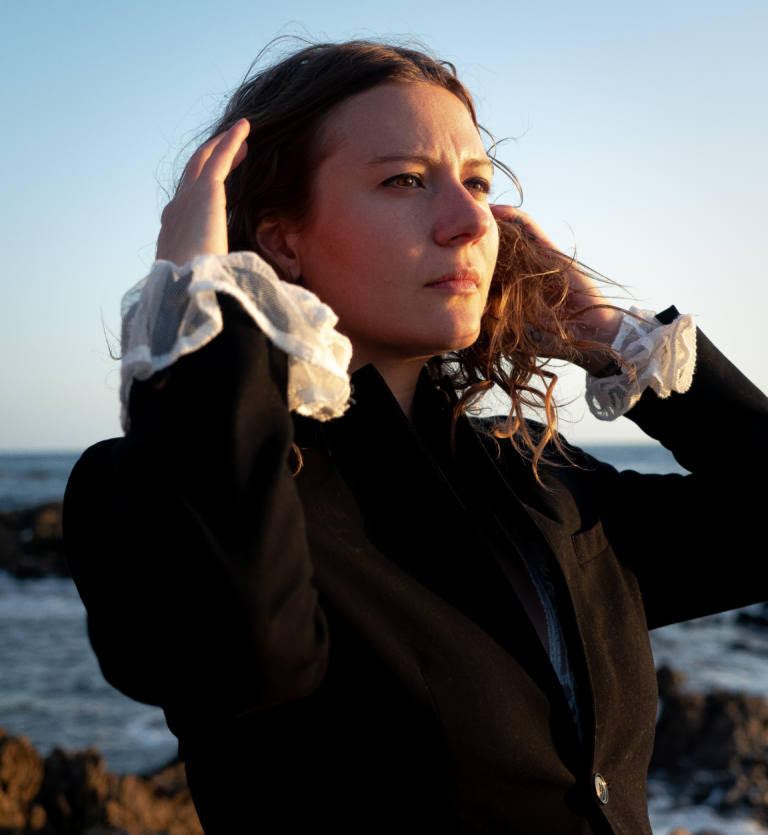
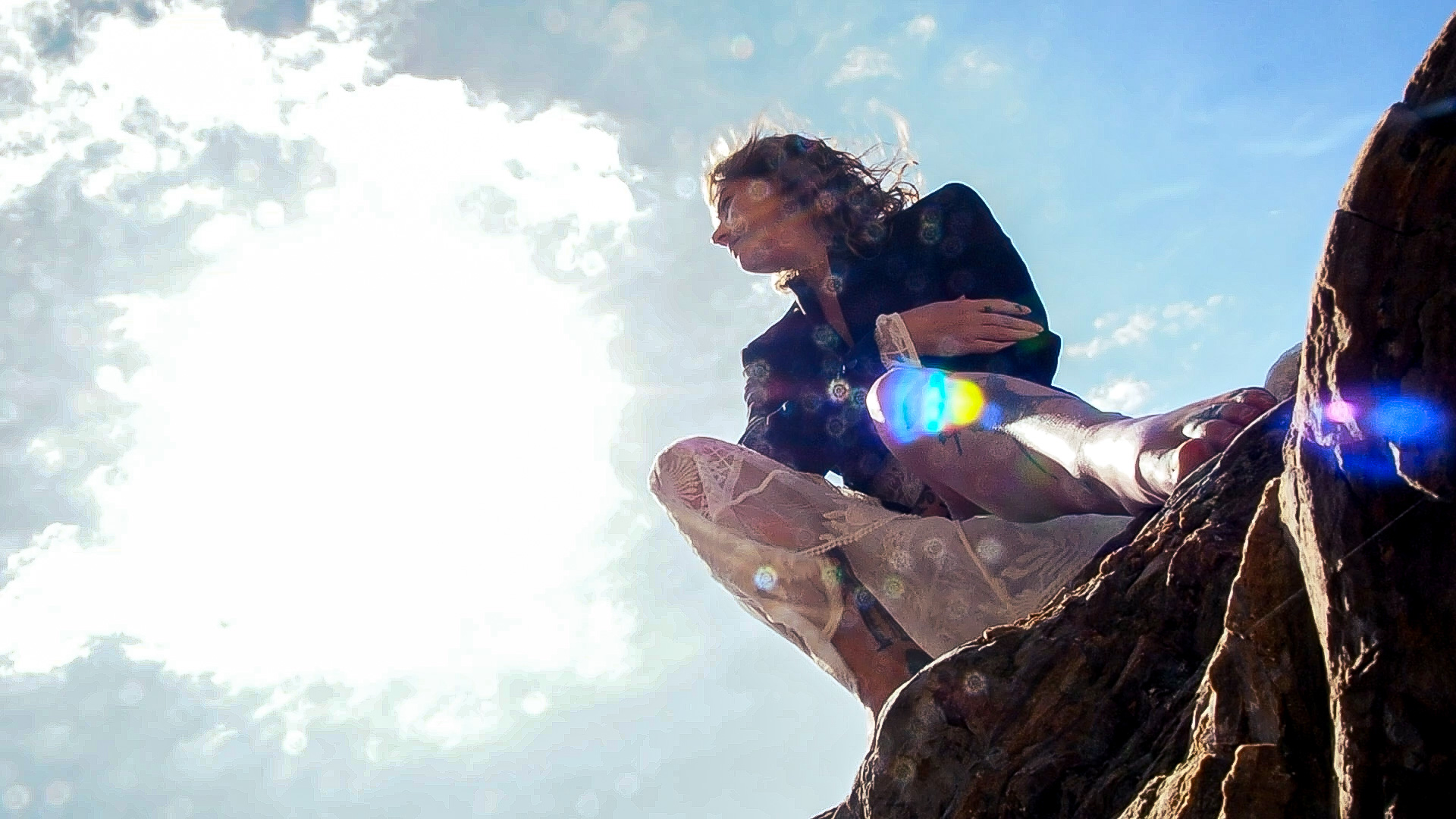
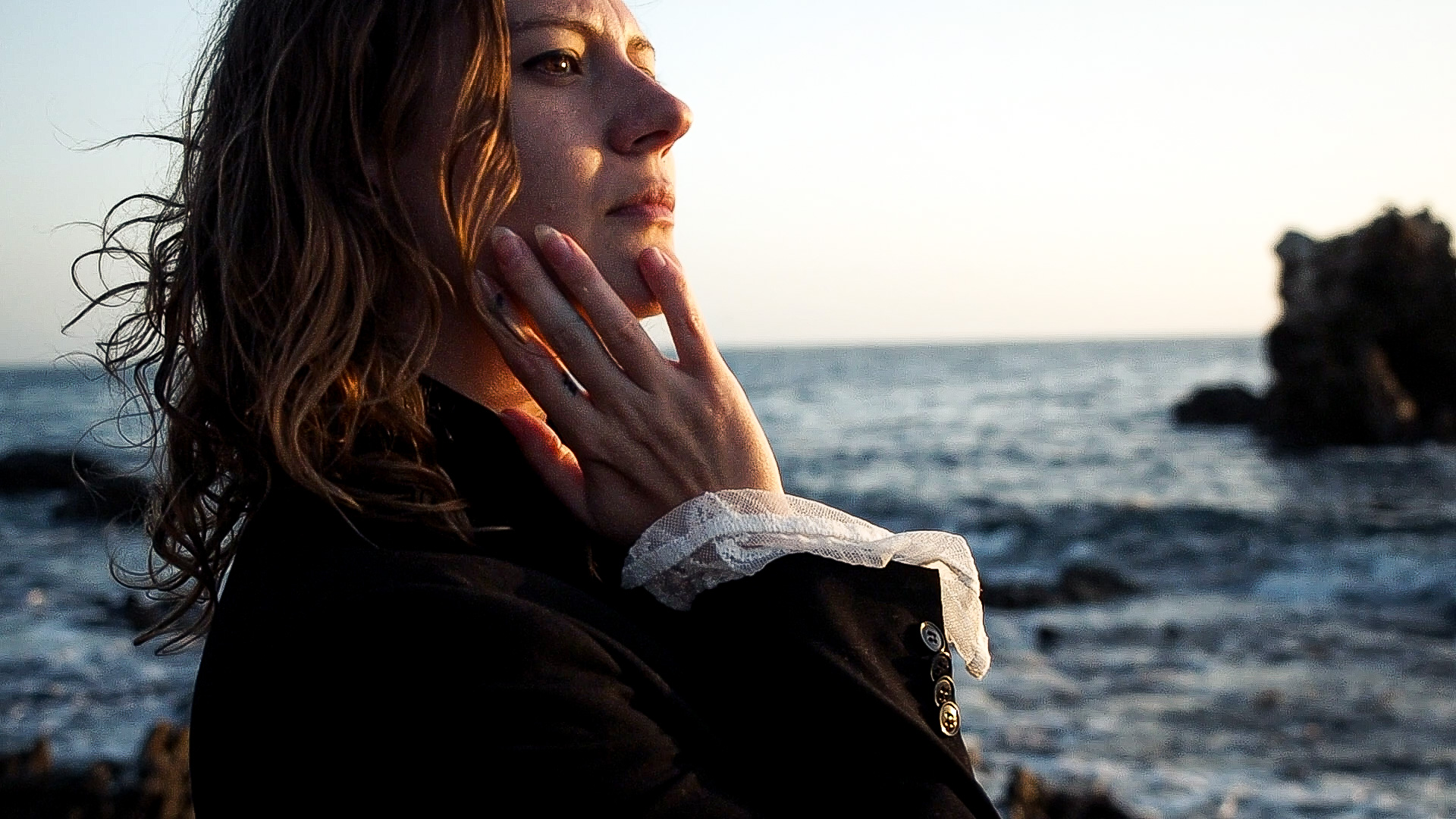
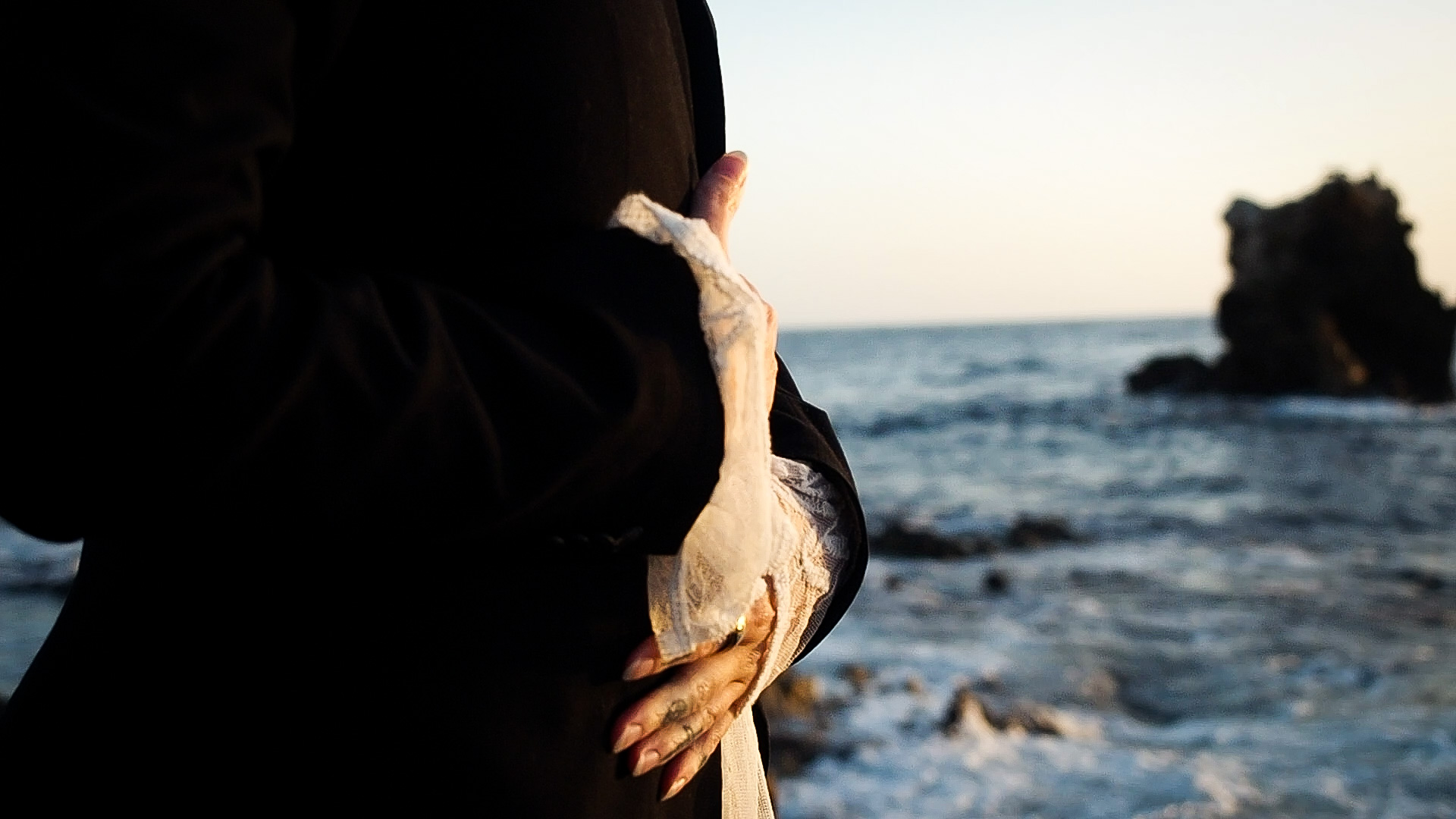
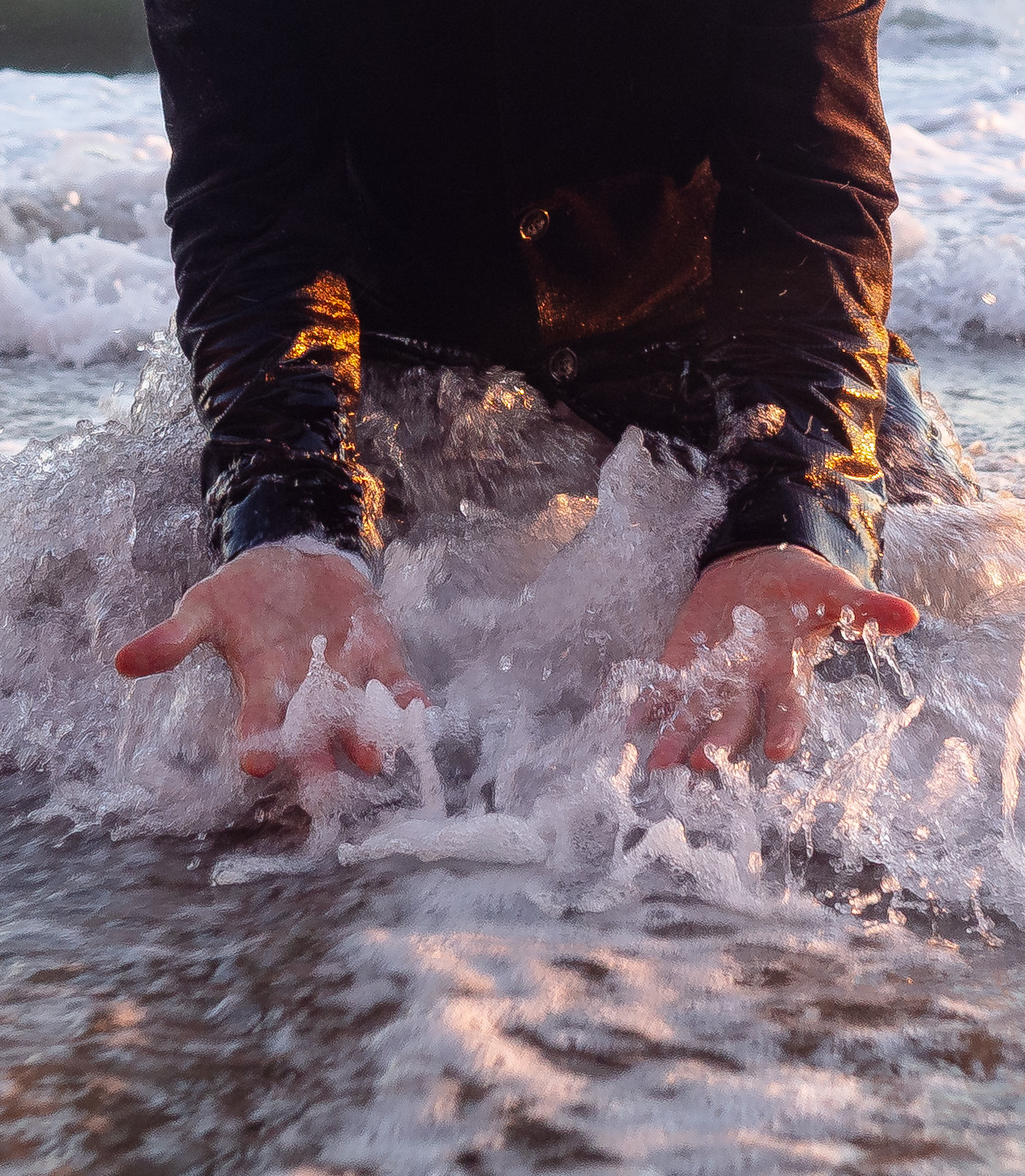
La mer, the sea. The mysterious origin holds the horizon, offering passage. Its surface reflects the sky, yet its depths remain opaque. To enter the sea is to relinquish certainty. Vision is altered by salt, light, and motion. Sound becomes distant. Time slows to the rhythm of waves and breath. In this altered state, the body is suspended between immersion and emergence. In the encounter, posture and perception are refigured along the porous lines between the self and the natural world.
aphrodite
Pirate’s Cove
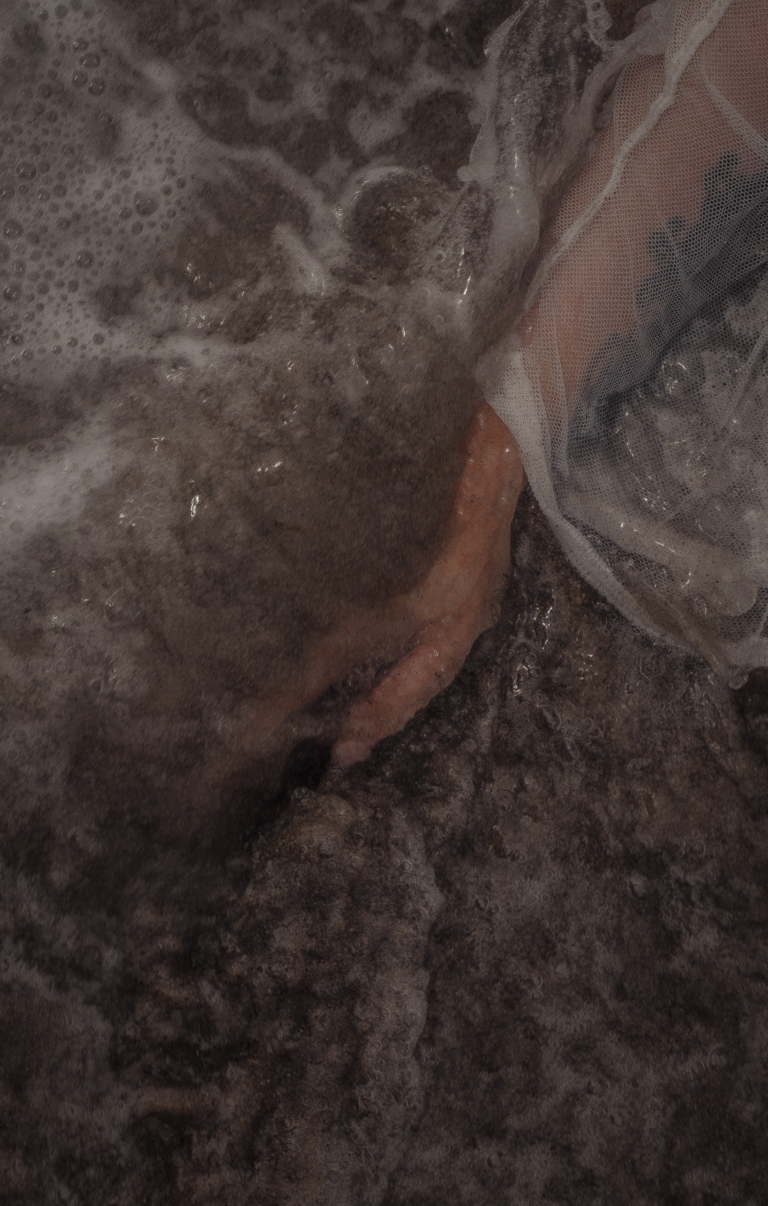
Aphrodite’s hand
The seashore is neither wholly land nor sea, the living edge where each bleeds into the other. Wind carries the taste of salt, waves gather and fall, wet sand gives beneath each step, and light drifts across water, skin, and stone. At the shoreline, where everything is worn smooth and made new again, the world is known through light, water and wind.
The sea reminds us that meaning is tidal. It arrives in currents, recedes into silence, and returns transformed. Like memory, it refuses permanence. Like sensation, it is immediate yet impossible to possess. To look out at the sea is to stand at a threshold, where we can see with openness to what moves us before we can name it.
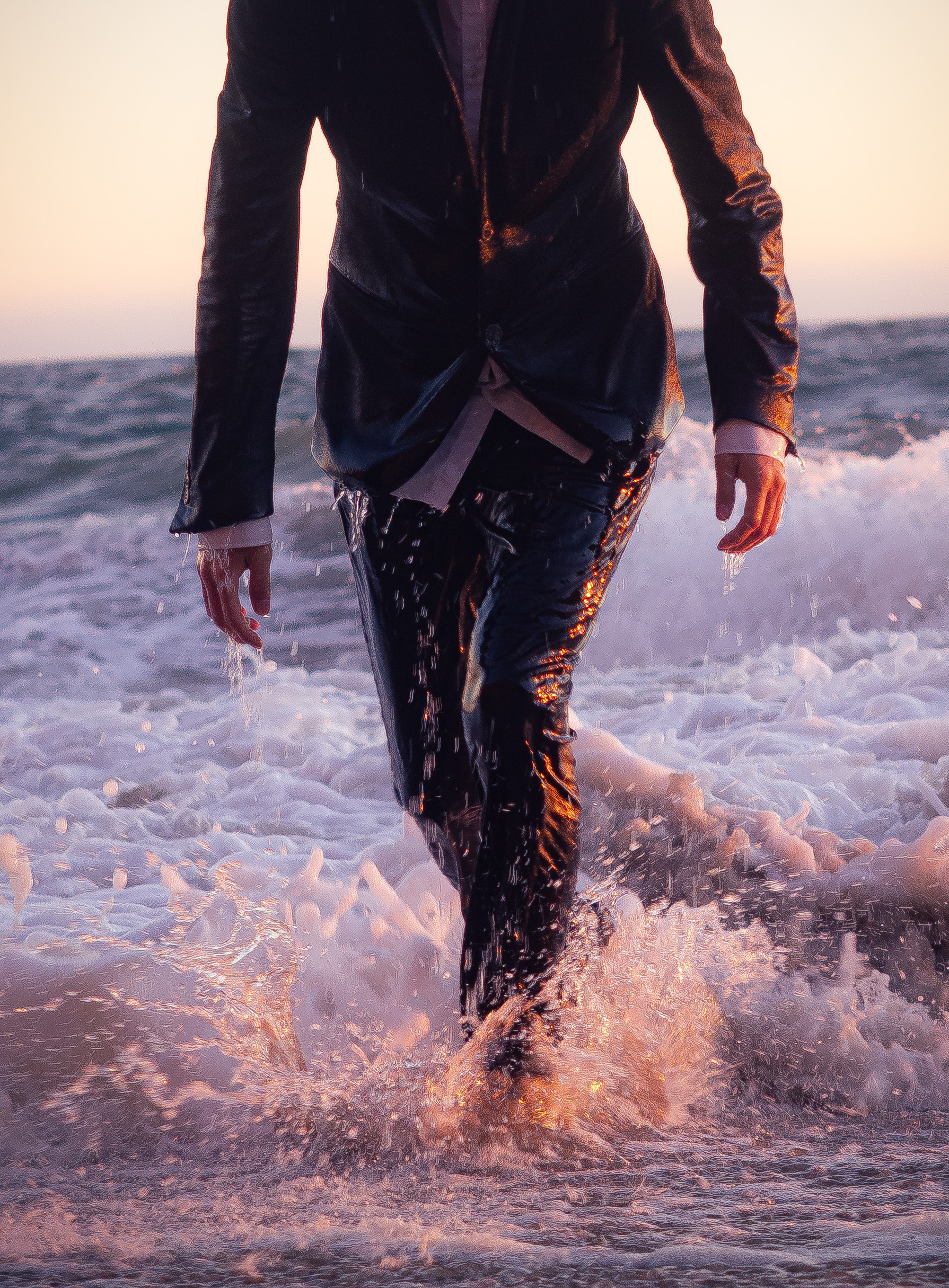
homme á la mer
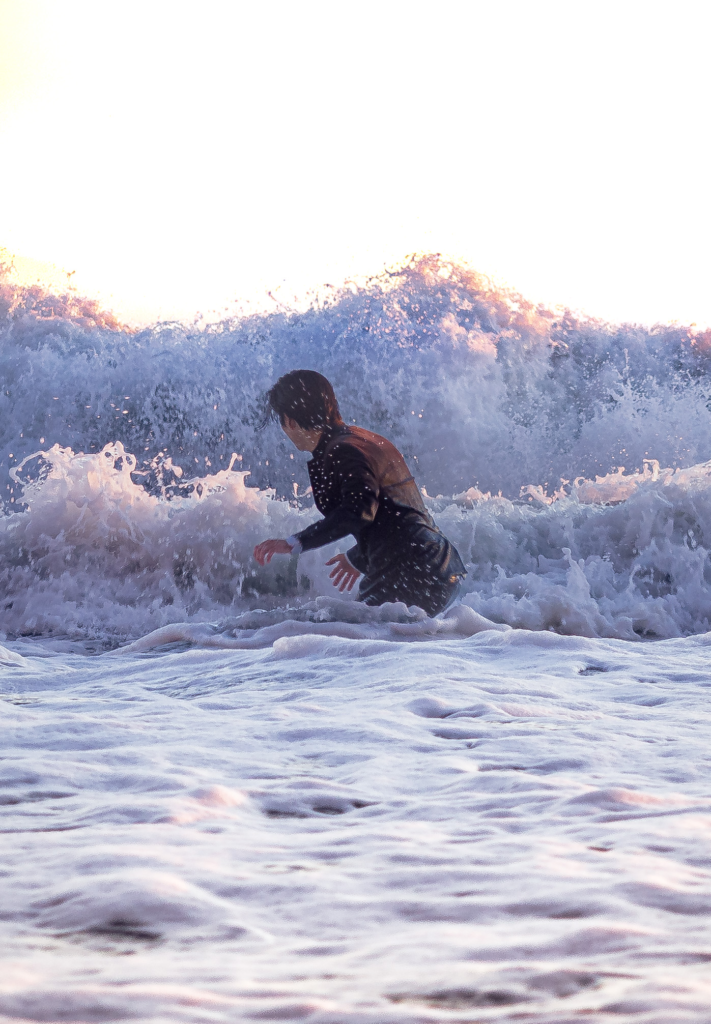
Point Dume
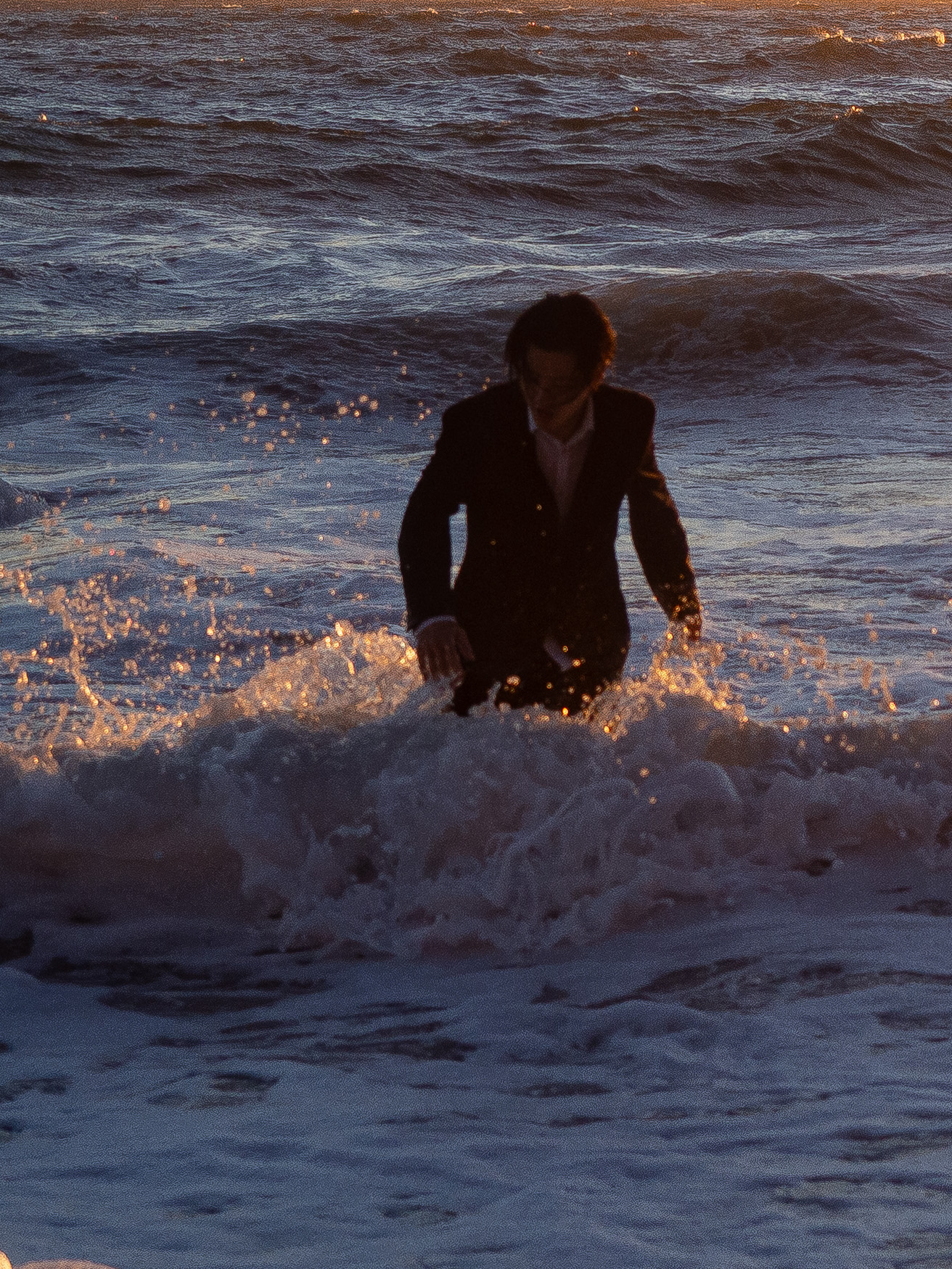
joe
Wind presses against the body, salt settles on the skin, smoothing sharp edges. The tide returns again and again, wearing away certainty through repetition and force. At the water's edge, where earth, water, and sky are never fully separate, the body is carried into the same restless rhythm, becoming less an observer than another element moving with the tide.